

Joby Aviation Stock Performance
Joby Aviation stock performance, exploring the numbers, the catalysts behind the stock’s rise or fall, and the risks you should keep in mind as an investor. We’ll also look at what’s next for the company and how it might impact the stock price.
Why This Matters for Investors
If you’re thinking about investing in Joby Aviation stock performance , you’re not alone. The stock has been on many investors’ radar because the eVTOL market is projected to grow rapidly in the coming years. As cities get more crowded and the demand for faster, eco-friendly transportation rises, companies like Joby are leading the way.
But there’s a catch: this technology isn’t mainstream yet. Joby’s success depends on a lot of moving parts—like regulatory approval, mass production, and proving that their vehicles are safe, efficient, and profitable.
Company Snapshot: What Is Joby Aviation All About?
What Does Joby Aviation Do?
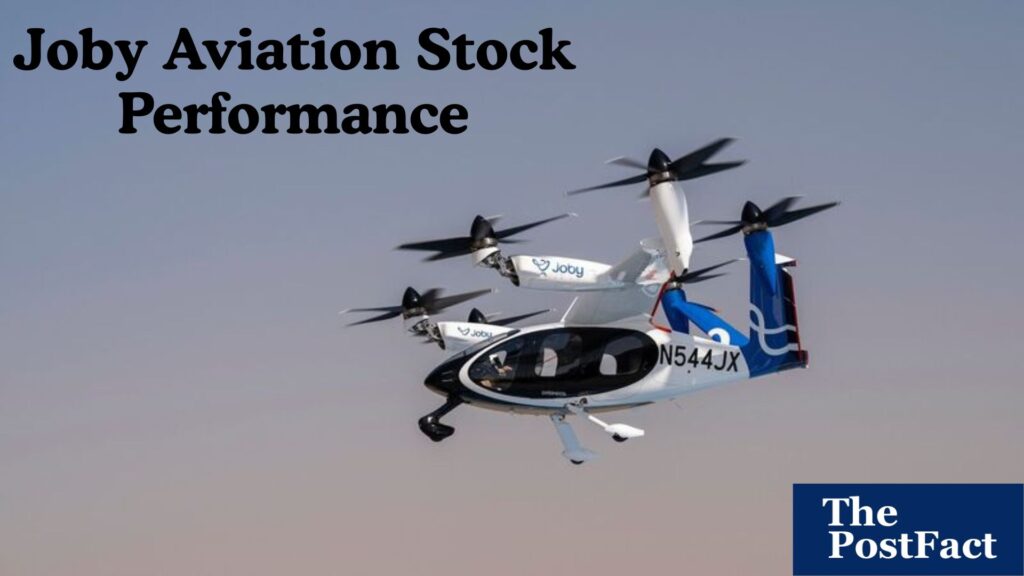
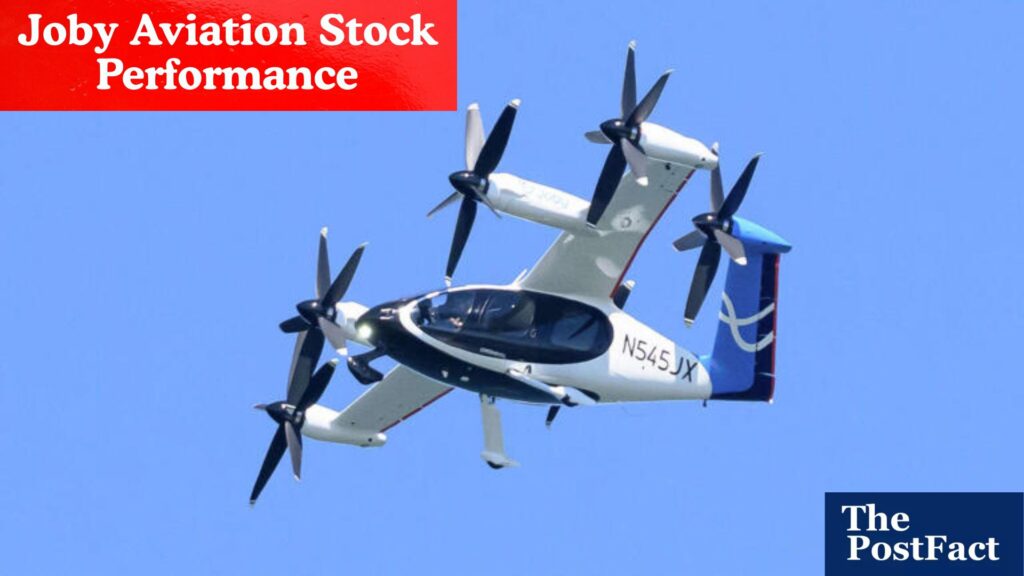
Joby Aviation is a company at the forefront of the air mobility revolution. They’re focused on creating electric vertical takeoff and landing (eVTOL) aircraft—basically, flying cars that are powered by electricity instead of gas. These aircraft are designed to take off and land vertically, just like a helicopter, but they’re quieter, more eco-friendly, and a lot cheaper to operate.
Imagine being able to book a quick ride through the skies in an electric air taxi to avoid road traffic. That’s the vision Joby is working towards. Their goal is to build these aircraft and make them available as part of an on-demand air taxi service. It’s all about making transportation quicker, cleaner, and more accessible.
The Key to Joby’s Success: eVTOL Technology
Joby’s technology is a game-changer. They’re not just building a plane; they’re designing a whole new way of flying. eVTOL aircraft have the potential to reduce travel time significantly, especially in crowded urban areas. For example, a flight from one part of a city to another might take just a few minutes compared to an hour-long drive.
What makes Joby stand out is their focus on electric power. Traditional helicopters and planes are noisy and use a lot of fuel, but Joby’s aircraft are much quieter and more sustainable. This is a huge advantage as cities look for greener solutions to transportation.
Key Facts About Joby Aviation
- Founded: Joby Aviation was founded in 2009 by JoeBen Bevirt.
- Ticker Symbol: JOBY (listed on the New York Stock Exchange).
- Headquarters: Based in Santa Cruz, California, Joby is situated in one of the innovation capitals of the world.
- Vision: Joby’s vision is to make air travel affordable and accessible for everyone, ultimately leading to a network of air taxis that can take people where they need to go faster and with less environmental impact.
Stock Price History & Key Metrics: How Has Joby Aviation Stock Performance
What’s the Current Stock Price?
As of now, Joby Aviation’s stock price has been a topic of much discussion in the financial world. Joby’s stock symbol is JOBY, and it’s traded on the New York Stock Exchange (NYSE). If you’re thinking of investing, the current price is a good starting point to understand how the market views Joby’s future.
How Joby’s Stock Has Moved Over Time
Looking at Joby’s stock over the past few years, you’ll notice it’s had some ups and downs, which is common for high-growth tech companies. Initially, Joby’s stock saw a big jump after the company went public in 2021, but it’s also experienced some pullbacks as investors wait to see how the company performs.
What’s important to remember is that Joby is still in its early stages, and the stock’s price is likely to move a lot as the company hits milestones like certification approval or starts mass-producing aircraft. For investors, this means patience is key — the stock may rise when positive news hits, but it can also drop during periods of uncertainty.
Key Stock Metrics to Know
When you’re thinking about investing in Joby Aviation, there are some important metrics you’ll want to keep an eye on:
- Market Cap: Joby’s market capitalization, or market cap, is the total value of all its shares combined. A higher market cap often indicates a more stable company, but Joby’s cap is still relatively small compared to big players in traditional aviation.
- Beta: This is a measure of how volatile Joby’s stock is compared to the overall market. Joby has a higher beta, meaning its stock tends to move more dramatically than the broader market. If the market goes up or down, Joby’s stock might move even more.
- Trading Volume: This tells you how many shares are being bought and sold. High volume can indicate strong investor interest, while low volume might suggest a lack of enthusiasm or uncertainty about the stock’s future.
Price Movements and Market Sentiment
The stock price of Joby is heavily influenced by investor sentiment — how confident people feel about the company’s future. For example, when Joby announces partnerships with major investors like Toyota or Intel, it often gets a boost in stock price. Positive regulatory news or milestone achievements, like passing an important test for their aircraft, can also lead to stock price increases.
Financial Performance & Earnings: How Is Joby Doing Financially?
Joby’s Financial Picture: Still in the Red
When it comes to financial performance, Joby Aviation is still in the early stages of its journey. Like many startups and innovative tech companies, Joby isn’t yet profitable. This means the company is still spending a lot to build its aircraft, get certifications, and scale up its business. While this may sound concerning, it’s actually quite common in industries where heavy investments are needed up front, especially in aviation.
As of now, Joby has posted negative earnings—this is typical for companies still developing complex technologies like electric flying cars. For example, in their most recent earnings report, Joby showed a loss of around $1 billion. But don’t let that scare you—this doesn’t mean the company is failing. It just means they’re in the “building” phase, and these kinds of losses are expected as they continue to grow.
Revenue Growth: A Long Road Ahead
Joby isn’t bringing in much revenue yet, either. But again, this is normal for a company that’s still in the pre-commercial stage. The revenue Joby does have mostly comes from government contracts and grants aimed at helping fund the development of new technologies. The company is working hard to set up a sustainable business model, but it won’t be until they can start selling air taxis or offering flying services that they will see significant revenue growth.
For investors, it’s important to understand that Joby’s revenue generation is tied to future commercial success. Once Joby begins operating air taxis, they could earn revenue from ticket sales, leasing aircraft, or even selling the technology to other companies.
What Analysts Are Saying
Looking at the analyst consensus, many experts are optimistic about Joby’s long-term potential, even though it may take years before they start seeing real profits. Analysts predict that once the company begins scaling and operating, revenues will rise sharply. But it’s still a bit of a gamble, since the timeline to profitability is unclear.
Upcoming Earnings: What’s Next?
Joby’s next earnings report will be important for investors. It’s a chance to see if the company is sticking to its timelines and if it’s hitting key milestones. If Joby can make progress on aircraft production, hit regulatory deadlines, and secure new partnerships, it could have a positive impact on their financials and stock price.
A Focus on Cash Flow
One key thing to watch for in Joby’s financials is cash flow. Since the company is not yet profitable, it’s crucial that they manage their cash reserves carefully to fund operations. Joby has raised substantial funds through public offerings and private investors, so their financial runway is looking good for now. However, keeping an eye on cash flow and burn rate (how quickly they’re spending money) will be important for assessing their financial health moving forward.
Catalysts Driving Stock Movement: What’s Fueling Joby’s Stock Price?
What Drives Joby’s Stock Price?
When it comes to Joby Aviation’s stock, there are several key factors—known as catalysts—that can send the stock price up or down. These catalysts are events, announcements, or milestones that significantly impact how investors feel about the company’s future. Understanding these can help you predict how Joby’s stock might move in the near future.
Major Partnerships and Investments
One of the biggest catalysts for Joby’s stock price has been its partnerships and investments from well-known companies. For instance, when Joby secured a major investment from Toyota, a global leader in automotive technology, it provided a huge vote of confidence in Joby’s future. Toyota’s involvement helps ensure that Joby has the financial backing and expertise needed to scale up its operations and bring its eVTOL technology to market.
Similarly, Joby has partnered with Uber, aiming to develop a seamless air taxi network that could transform urban transportation. These partnerships can significantly boost Joby’s stock price, as investors often see them as proof that the company has the support and infrastructure needed to succeed.
Regulatory Milestones and Approvals
Joby Aviation’s stock price is also influenced by regulatory milestones, especially as the company needs approval from aviation authorities, such as the Federal Aviation Administration (FAA), before it can start flying commercial air taxis. Each step closer to certification can lead to a boost in stock value, as it shows the company is making progress toward launching its services.
Technological Advancements and Product Development
Joby’s ability to develop cutting-edge technology is another major driver of its stock price. For instance, any news about new aircraft design improvements, increased flight range, or advancements in autonomous flying capabilities can excite investors. As Joby’s eVTOL technology continues to evolve, investors will likely respond positively, seeing it as a sign that the company is positioning itself to lead the air mobility market.
Additionally, as the technology becomes more efficient and cost-effective, the potential for lower operational costs (compared to traditional air travel) could give Joby a competitive edge. If investors believe that Joby’s aircraft will soon be ready for mass production and be a major player in the market, this can drive stock prices higher.
Market Trends and Growing Demand for Sustainable Travel
Another factor that can drive Joby’s stock price is the broader trend toward sustainable and eco-friendly transportation. As cities become more congested and the demand for quicker, greener alternatives to traditional cars and planes grows, air taxis become more attractive. Investors are betting that Joby, with its electric aircraft, will be at the forefront of this trend.
Increased awareness about climate change and the push for cleaner alternatives in transportation means that green technologies like eVTOLs are gaining more attention. If investors believe that Joby’s technology can help meet this demand, they might view it as a strong long-term investment.
Risks & Headwinds: What Could Hold Joby Back?
Understanding the Risks Involved with Joby’s Stock
Like any high-growth company, Joby Aviation faces several risks and challenges that could impact its stock price and long-term success. Investors should be aware of these potential obstacles before diving into the stock. Here are some key risks that could affect Joby’s journey.
1. Regulatory Delays
One of the biggest risks for Joby is the need for regulatory approval. Joby’s eVTOL aircraft need to be certified by aviation authorities like the Federal Aviation Administration (FAA) before they can fly commercially. Getting this certification can be a lengthy and complex process, and any delays could push back Joby’s timeline for launching air taxi services.
2. Cash Burn and Profitability
Joby is still in its early stages, and like many tech startups, it’s burning cash to fund development and expansion. While they’ve secured funding from investors like Toyota, they’ll need to carefully manage their cash flow to avoid running out of money before they become profitable.
The company isn’t generating significant revenue yet, which means it relies on continued investment to cover its costs. If they can’t bring in enough revenue soon, or if additional funding isn’t available, it could put Joby’s future at risk. This cash burn is a risk that investors should keep in mind, as it could affect the company’s ability to survive in the long run.
3. Manufacturing and Production Challenges
Another challenge Joby faces is getting their eVTOL aircraft into mass production. Building these high-tech aircraft is complex, and scaling up production can take time. Joby needs to ensure they can produce the aircraft efficiently and at scale while keeping costs down.
For instance, any manufacturing delays or issues with production could slow down Joby’s plans for commercialization. This would not only affect their financial performance but also damage their credibility with investors.
4. Competition
While Joby is one of the leaders in the eVTOL space, they’re not alone. Other companies, like Archer Aviation, Lilium, and Vertical Aerospace, are also working on similar technology. Joby faces fierce competition, and if other companies can get their air taxis to market faster or more efficiently, Joby could lose its competitive edge.
In this rapidly developing market, staying ahead of competitors is crucial. If Joby doesn’t move quickly enough, it could lose out on market share, which would negatively affect its stock.
5. Public Perception and Adoption
Even if Joby can overcome technical and regulatory hurdles, there’s still the challenge of public perception. People need to feel comfortable flying in air taxis, and this could take time. Air travel is still a relatively new concept for many, and there may be skepticism about safety and reliability.
Joby needs to build trust with the public and prove that their aircraft are safe, efficient, and affordable. If the company struggles to win over customers, it could slow down their growth and hurt their stock price.
Valuation & What It Signals: Is Joby’s Stock Overvalued or Underpriced?
What Is Joby’s Current Valuation?
When it comes to Joby Aviation, one of the most talked-about topics is its valuation. Simply put, valuation is the process of determining how much the company is worth. For a company like Joby, which is still in its early stages and hasn’t yet turned a profit, valuing the stock can be tricky.
Joby’s market capitalization (market cap) gives us a rough idea of its valuation. As of the latest data, Joby’s market cap is in the billion-dollar range, placing it as a mid-cap stock in the tech and aviation sectors. But here’s the thing: Joby’s valuation isn’t based on current profits—it’s based on its potential to disrupt the transportation and aviation industries. This makes its valuation more speculative and future-driven than many other companies you might find on the stock market.
Is Joby Overvalued?
Many investors wonder whether Joby is overvalued. Since the company is still losing money and hasn’t begun its commercial air taxi service yet, some analysts argue that Joby’s stock price may be too high for its current stage.
To give you some perspective, let’s compare Joby’s valuation to other companies in the eVTOL or aviation technology space. For instance, Archer Aviation and Lilium—both competitors in the same market—also face similar challenges in terms of development and regulatory approval. However, Joby’s stock has been trading at a premium compared to these companies. Some critics believe that the stock price is inflated due to the hype around the potential of electric flying taxis, rather than the company’s current financials.
How Does Joby Compare to Its Peers?
To determine if Joby is undervalued or overvalued, it’s helpful to compare its valuation to other companies in the eVTOL market. Joby isn’t the only company working on flying cars. Archer, Lilium, and Vertical Aerospace are also in the race, and they all have similar ambitions—creating an air taxi service that can change the way we think about urban travel.
However, Joby has some unique advantages, such as strong partnerships with Toyota and Intel. These partnerships not only provide financial backing but also technical expertise that could help Joby get its aircraft off the ground. If Joby can execute on these partnerships and achieve its goals faster than its competitors, it may justify its current valuation.
Looking at Future Growth
Joby’s valuation is largely based on future growth potential. If Joby succeeds in certifying its aircraft, scaling up production, and eventually offering air taxi services, the company could see massive growth. Many analysts predict that Joby could capture a significant portion of the air mobility market, which is expected to be worth billions of dollars in the coming decades.
This makes Joby aviation stock performance appealing to growth investors, who are willing to take on more risk in exchange for the possibility of high returns. If you believe in the potential of air taxis, then Joby’s current valuation might make sense. But if you’re more risk-averse, it’s important to weigh the potential for delays or setbacks that could affect the company’s progress.
What to Watch Going Forward: Key Milestones for Joby’s Future
Keeping an Eye on Key Milestones
Joby Aviation is still in the early stages of its journey, and for investors, it’s important to stay updated on the company’s key milestones. These milestones will determine whether Joby can move forward with its ambitious goals or face setbacks that might affect its stock price.
Here’s a look at some critical upcoming events and what they could mean for Joby’s future.
1. FAA Certification and Regulatory Approval
One of the most important milestones to watch for is FAA certification. Without approval from the Federal Aviation Administration (FAA), Joby’s aircraft can’t be flown commercially. This is a major step in getting Joby’s air taxi service off the ground.
If the company can secure this certification, it will mark a major milestone in their path toward launching commercial flights. It will also likely be a positive signal to investors, as it confirms that Joby is meeting the regulatory requirements needed to operate safely in the sky.
On the flip side, any delays or issues with certification could hurt investor confidence and delay Joby’s plans for scaling up production.
2. Commercial Launch of Air Taxis
The next big milestone is the commercial launch of Joby’s air taxis. Once the company gets FAA approval, they’ll be able to begin offering paid air taxi rides to customers. This is where the real revenue potential comes in, as Joby can start generating income from flights.
If Joby is able to launch its services successfully in key markets (such as cities with heavy traffic), it could quickly grow its customer base and boost its stock price. However, this is still a few years away, and investors should watch how Joby handles its operations, customer adoption, and any hiccups along the way.
3. Expansion of Manufacturing Capacity
Joby needs to scale up its production capacity to meet demand once its aircraft are ready for mass production. One key milestone will be the completion of Joby’s manufacturing facilities and the company’s ability to produce its eVTOL aircraft in larger quantities.
The company has already begun ramping up production, but there may be challenges along the way, such as supply chain issues, manufacturing costs, or delays in the production process. Keep an eye on how efficiently Joby can manage these issues as it prepares for full-scale operations.
4. Securing Additional Partnerships and Investments
As Joby moves forward, new partnerships and investments will play a crucial role in helping the company grow. For example, strategic partnerships with airline companies or infrastructure providers (like vertiports) can help accelerate the development of Joby’s air taxi network.
Investors should keep an eye on any new funding rounds or partnerships Joby secures, as these can give the company the financial and operational support it needs to scale its business.
5. Public Perception and Customer Adoption
Even with regulatory approval and a functioning air taxi service, public perception is key. Will customers feel comfortable flying in an electric air taxi? Will the service be affordable and efficient enough to compete with traditional transportation options like taxis or ridesharing apps?
Joby will need to build trust with the public by proving that its aircraft are safe, reliable, and affordable. If Joby is successful in gaining consumer confidence and adoption, it will have a much better chance of succeeding in the long term.
What Does Joby’s Future Look Like?
Recapping Joby’s Journey So Far
Joby Aviation stock performance is on an exciting journey to revolutionize the way we think about air travel. With its electric vertical takeoff and landing (eVTOL) aircraft, Joby aims to create a new form of transportation—flying air taxis that could ease urban congestion and reduce travel times.
So far, Joby has made some impressive strides. The company has secured major investments from partners like Toyota and Intel, and it’s made significant progress in the development of its aircraft. They’ve been working hard on getting FAA certification, which is crucial for their ability to operate commercially.
But Joby is still in the early stages. While the potential is huge, there are a number of risks that investors need to consider. These include regulatory hurdles, competition from other companies, and the challenges of scaling up production and earning revenue.
What’s Next for Joby?
Looking ahead, Joby’s success depends on a few key factors:
- Certification: If Joby can gain FAA certification, it will be a huge win for the company and could drive the stock price up.
- Commercial Launch: The launch of air taxis will be the real test of Joby’s business model. Will people adopt this new form of transportation? If it works, Joby could be looking at significant growth.
- Manufacturing & Scaling: Joby needs to ramp up its production capacity to meet the demand for its air taxis. How well the company handles this growth will be critical to its long-term success.
Public Perception: The success of Joby’s air taxis won’t just depend on the technology; it will also depend on how the public perceives them. Joby must build trust with potential customers to make its services a mainstream option.